
- October 6, 2025
- Posted by: admin
- Category: Florida Custom Closet Contractor
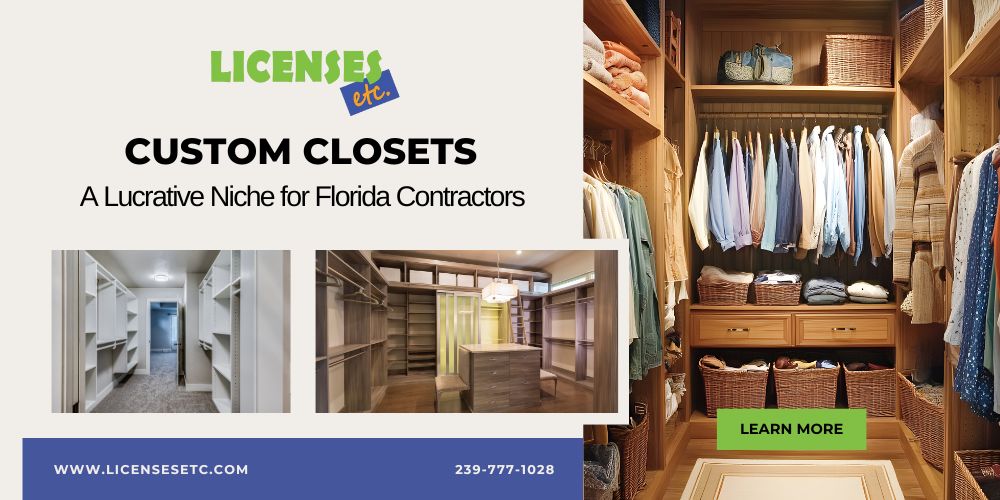
Many remodeling contractors look for specialized niches to grow their business and increase profitability. One often-overlooked area with significant potential is designing and building custom closets. Homeowners are increasingly seeking organized, beautiful, and functional storage solutions, turning cluttered spaces into luxurious, personalized retreats. For a skilled contractor, this trend represents a fantastic business opportunity.
This article explores the profitable world of custom closet contracting. We will cover the top design trends clients are demanding, the costs and profit margins involved, and the steps you need to take to get your business licensed and running in Florida.
The Appeal of the Custom Closet Niche
Why focus on closets? The demand is driven by a desire for organization and a touch of luxury. Standard closets with a single rod and shelf no longer meet the needs of modern homeowners. They want tailored solutions that maximize space, protect their belongings, and add value to their homes. This creates a market for contractors who can deliver high-quality, bespoke designs.
Profit margins in this niche can be quite attractive. Because the work is specialized and custom, you can command higher prices than for general remodeling tasks. By developing efficient systems for design, fabrication, and installation, you can complete projects quickly while maintaining a high standard of quality, boosting your overall profitability.
Top 5 Custom Closet Design Trends
To succeed in this market, you need to know what clients want. Staying on top of the latest trends will help you create compelling designs that homeowners love.
1. The Boutique-Inspired Walk-In
Homeowners want their walk-in closets to feel like a high-end retail boutique. This trend involves creating a curated space that showcases clothing, shoes, and accessories. Key features include glass-front cabinet doors, dedicated display shelving for handbags and shoes, and a central island with drawers for smaller items. The focus is on visibility and accessibility, making getting dressed feel like a special experience.
2. Integrated LED Lighting
Lighting is no longer an afterthought. Integrated LED lighting is a must-have feature in modern custom closets. This includes strip lighting along shelves, inside drawers, and illuminating hanging rods. It not only enhances visibility but also adds a dramatic, high-end feel. Smart lighting systems that can be controlled with a phone or voice command are also gaining popularity.
3. Mixed Materials and Finishes
Gone are the days of plain white melamine. Clients are now looking for a richer, more textured look. This involves combining different materials like dark wood grains, high-gloss laminates, metal accents, and even leather or fabric panels. Matte black or brushed gold hardware for handles and rods adds a final touch of sophistication.
4. Smart Storage and Organization
A truly custom closet is all about function. Homeowners want clever solutions that cater to their specific wardrobe. Popular requests include pull-out pants racks, velvet-lined jewelry drawers, built-in hampers, and adjustable shelving. Fold-out ironing boards and charging stations for electronic devices are also common additions that add significant value.
5. The “Cl-office” or Flex Space
As more people work from home, the need for dedicated office space is critical. Some homeowners are incorporating a small desk or vanity area into their walk-in closets. This “cl-office” (closet-office) provides a quiet, private spot to work or get ready. This trend maximizes the utility of a large closet, turning it into a multi-functional room.
Cost vs. Profitability for Contractors
Understanding the numbers is key to building a successful business. The cost of a custom closet project can vary widely based on size, materials, and complexity.
- Project Costs: A simple reach-in closet system might cost a homeowner between $1,500 and $3,000. A more elaborate walk-in closet with premium materials and features could range from $5,000 to $25,000 or more. High-end, boutique-style closets with islands and extensive custom cabinetry can easily exceed $50,000.
- Profit Potential: As a contractor, your material costs will typically represent 30-40% of the project total. Labor will be another 20-30%. This leaves a healthy gross profit margin of 30-50% per project. By standardizing your designs and sourcing materials effectively, you can optimize these margins. A contractor focusing on mid-range custom closets could realistically generate significant annual revenue.
How to Start Your Custom Closet Business in Florida
Ready to tap into this lucrative market? Here are the steps to get started, including the necessary licensing.
1. Choose Your Business Structure
First, you need to form a legal business entity. This protects your personal assets from business liabilities. Common options include a Sole Proprietorship, an LLC (Limited Liability Company), or a Corporation. The structure you choose has important tax implications.
Tax Pros and Cons of Each Structure
- Sole Proprietorship:
-
- Pros: This is the simplest and cheapest structure to set up. You report business income and losses on your personal tax return (Schedule C), avoiding separate business taxes.
- Cons: There is no legal separation between you and your business. You are personally liable for all business debts and lawsuits. This also means you pay self-employment taxes (Social Security and Medicare) on all business profits.
- Limited Liability Company (LLC):
-
- Pros: An LLC offers the liability protection of a corporation with the tax flexibility of a sole proprietorship. By default, single-member LLCs are taxed like sole proprietorships (pass-through taxation). This structure separates your personal assets from business debts.
- Cons: LLCs can be more expensive to set up and maintain than a sole proprietorship. You’ll still be responsible for self-employment taxes on all profits.
- S Corporation (S Corp):
-
- Pros: An LLC can elect to be taxed as an S Corp. This allows you to pay yourself a “reasonable salary” and take the remaining profits as distributions. Only the salary is subject to self-employment taxes, potentially offering significant tax savings.
- Cons: S Corps face stricter administrative requirements, including payroll processing and more complex tax filings. Determining a “reasonable salary” can be complex and is subject to IRS scrutiny.
What to Consider: As a new contractor, an LLC often provides the best balance of liability protection and simplicity. As your business grows and becomes more profitable, electing S Corp tax status can become a very attractive option for reducing your tax burden. It is always wise to consult with a financial advisor or CPA to determine the best structure for your specific situation.
2. Obtain the Right Florida Contractor License
In Florida, any structural work or significant remodeling requires a contractor license. For custom closet installations, the specific license you need depends on the scope of your work.
- Certified General, Building, or Residential Contractor: If your projects involve moving walls, changing framing, or making structural alterations to create the closet space, you will need one of these primary licenses. These licenses allow you to perform a wide range of construction and remodeling tasks.
- Finish Carpentry Specialty License: In some local jurisdictions, if your work is limited to installing shelving, cabinets, and trim without structural changes, a finish carpentry license may suffice. However, many counties do not offer this specific specialty license, making a state-certified license a more versatile option.
Qualifications for a Florida Contractor License
To qualify for a Certified General, Building, or Residential Contractor license in Florida, you generally need to meet the following criteria:
- Be at least 18 years old.
- Have a Social Security Number or Individual Taxpayer Identification Number.
- Demonstrate financial stability and responsibility.
- Pass the state-required trade, business, and finance examinations.
- Have a combination of education and experience totaling four years. This experience must include at least one year as a foreman.
The experience requirement can be a major hurdle for many aspiring contractors. Proving your work history to the state board can be a complex process.
Let LicensesETC Help You Get Started
Navigating the requirements for business formation and contractor licensing can be overwhelming. That’s where we come in. At LicensesETC, we specialize in helping contractors like you get licensed and operational quickly and efficiently.
Our team of experts can:
- Handle Your Business Formation: We can help you choose the right business structure and file all the necessary paperwork to establish your LLC or corporation.
- Manage Your License Application: We take the guesswork out of the application process. We will compile your work experience, ensure all documentation is correct, and submit a complete and accurate application on your behalf, greatly increasing your chances of approval.
- Guide You Through the Process: We provide support every step of the way, from exam preparation to final license approval.
Don’t let paperwork stand between you and a profitable new business venture. The demand for custom closets is growing, and with the right skills and proper licensing, you can build a thriving company in this exciting niche.
Contact LicensesETC today, and let us help you turn your contracting skills into a successful custom closet business.