
- June 30, 2026
- Posted by: admin
- Category: Contractor Safety Tips
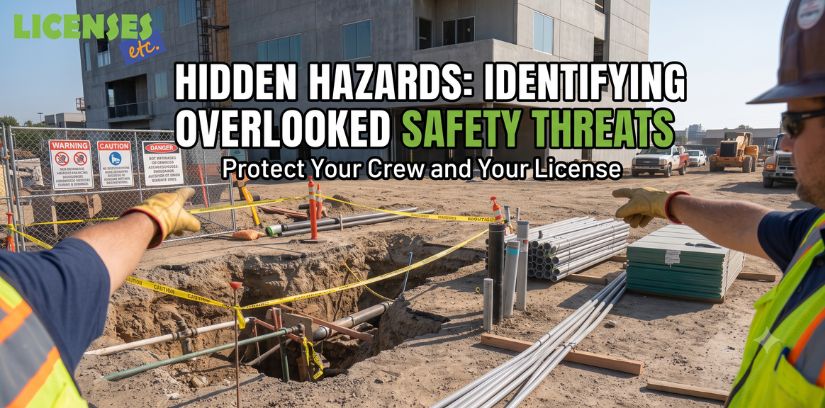
Jobs in the construction industry carry significantly higher risks than almost any other sector. In fact, much of the daily work that contractors perform is inherently dangerous. While every crew member knows to watch out for the obvious threats, such as heavy machinery in motion or high-voltage electrical wires, it is often the less visible, overlooked elements that cause the most severe accidents and long-term health complications.
Dangerous situations can be found anywhere on a construction site, whether you are working on an open-air commercial build or doing residential remodeling indoors. To protect your crew, preserve your reputation, and maintain full compliance with safety regulations, it is critical to look beyond the obvious.
The Crucial First Step: Site Assessment and Situational Awareness
On any construction site, being acutely aware of your immediate surroundings is the first line of defense. Before a single tool is unpacked or equipment is turned on, a comprehensive walk-through should be conducted. Checking out the entire site gives your team a clear framework of where everything is located, helping to identify potential problem areas so there are no costly surprises mid-project.
When conducting a pre-work safety inspection, look closely for these hidden or easily missed hazards:
-
Subsurface and Ground Conditions: Never assume the ground is stable. Make sure the floor, soil, or scaffolding foundation is entirely solid and structurally sound before placing extension ladders, staging, or heavy equipment on it. Wet weather, hidden sinkholes, or poorly compacted soil can lead to sudden shifts and devastating falls.
-
Toxic Environmental Materials: Older buildings frequently conceal dangerous materials. Check thoroughly for hidden mold, lead paint, and asbestos before disturbing walls or ceilings. Breathing in these microscopic fibers can cause severe, irreversible health problems down the road.
-
Outdoor and Environmental Risks: For exterior work, do not ignore the natural surroundings. Check bushes, tall grass, and dense greenery for poisonous plants, sharp debris, or nests of dangerous insects. Additionally, extreme heat or poor air quality from regional wildfires represent modern environmental hazards that require strict hydration and rest protocols.
-
Protruding and Debris Hazards: Look closely for structural anomalies, such as jagged rebar, exposed nails, or sharp objects sticking out in high-traffic walkways that can snag clothing or puncture protective gear.
-
Exposed Electrical and Hazardous Lighting: Watch out for temporary or exposed wiring that lacks proper grounding. Furthermore, check to make sure fluorescent lamps are fully intact. Broken legacy lamps can potentially release toxic mercury vapor into enclosed spaces.
-
Underground Utility Lines: Double-check the location of all underground services that may cross the property lines, including electrical grids, natural gas lines, water mains, septic systems, sewer pipes, telephone wires, and fiber-optic cables. Striking into any of these lines can cause severe environmental damage, immense property damage, utility blackouts, or catastrophic personal injury. Always utilize the local “Call Before You Dig” (811) service prior to breaking ground.
-
Overhead and Unstable Structures: Look upward for any unstable materials, loose masonry, unsecured tools on scaffolding, or low-hanging branches that could potentially fall down on top of workers.
Implementing Modern Safety Protocols
Identifying these issues is only half the battle; eliminating them requires proactive management. Implementing a daily tailgate safety meeting ensures that every worker is aligned on the specific hazards of that day’s tasks.
Ensure that your site is fully stocked with the appropriate personal protective equipment (PPE), ranging from respiratory protection for dust and mold to proper eye and hand protection. Finally, always maintain a fully stocked, accessible first-aid kit on-site. While not all accidents can be prevented entirely, rapid response capabilities drastically mitigate the severity of an injury.
Focus on What Matters: Let Us Handle Your Licensing
Maintaining a safe job site requires your complete, undivided attention. If you are spending your evenings drowning in complex government paperwork, trying to figure out state regulations, or making endless calls to licensing boards, you are pulling focus away from your crew and your business.
Licenses Etc. helps contractors navigate the entire application process seamlessly. While 90% of contractor license applications are rejected by the state due to minor errors, 99% of our clients’ applications sail through with no problems. We don’t simply fill out forms; we strategically analyze your work history to build a winning application from start to finish.
Let us handle the bureaucracy so you can focus on running a safe, profitable